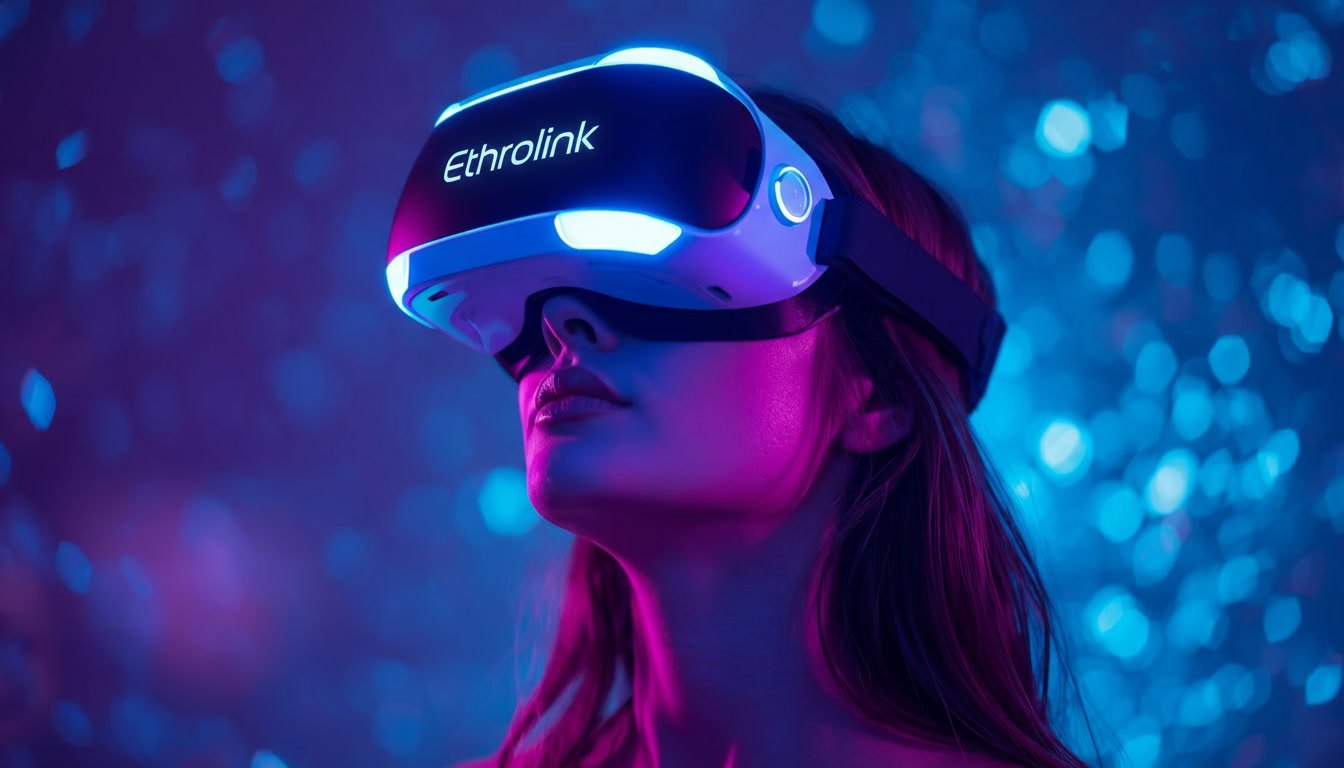
Virtual Reality (VR) is no longer just a gaming technology—it's becoming a powerful educational tool that's transforming how students learn and engage with complex subjects. By creating fully immersive, interactive environments, VR enables experiential learning that was previously impossible in traditional classrooms.

The Impact of Immersive Learning
VR creates learning environments that engage multiple senses, leading to better knowledge retention and deeper understanding. Studies show that students who learn through immersive experiences demonstrate:
Unlike traditional methods where students passively receive information, VR places them at the center of the learning experience, allowing them to interact with content and learn through discovery.
Applications Across Educational Fields
STEM Education
VR is particularly transformative in science, technology, engineering, and mathematics education:
- Biology: Students can explore human anatomy in 3D, walking through organs and observing biological processes at the cellular level.
- Chemistry: Virtual labs allow safe experimentation with dangerous chemicals and complex reactions.
- Physics: Concepts like quantum mechanics and relativity become tangible through interactive simulations.
- Engineering: Students can design, build, and test structures in virtual environments before creating physical prototypes.
History and Social Studies
VR transports students to different time periods and cultures, creating powerful emotional connections with historical events:
Students can walk through historical sites, witness key events, and interact with historical figures, making abstract concepts concrete and memorable.
Medical and Healthcare Training
Medical schools and healthcare institutions are adopting VR for:
- Surgical Training: Practice complex procedures in risk-free virtual environments
- Patient Diagnosis: Simulate patient interactions and diagnostic scenarios
- Anatomy Education: Explore detailed 3D models of human anatomy
- Emergency Response: Train for high-pressure medical situations
Accessibility and Special Education
VR offers unique benefits for students with special needs and learning differences:
- Autism Spectrum: Controlled virtual environments help practice social skills and reduce anxiety
- Physical Disabilities: VR enables experiences that might be physically impossible in the real world
- Learning Differences: Multi-sensory approaches benefit students with dyslexia, ADHD, and other challenges
- Remote Learning: High-quality educational experiences for students in isolated areas

Implementation Challenges and Solutions
While promising, VR adoption in education faces several hurdles:
Cost Barriers: High-quality VR equipment remains expensive for many institutions. Solutions include shared device models, subscription services, and gradual implementation plans.
Content Development: Creating educational VR content requires specialized skills. The growing ecosystem of educational VR platforms and authoring tools is making content creation more accessible.
Teacher Training: Educators need support to effectively integrate VR into curricula. Professional development programs and peer learning communities are addressing this challenge.
Technical Infrastructure: Schools require adequate computing power and network capabilities. Cloud-based VR solutions and improved hardware are reducing these requirements.
The Future of VR in Education
As technology advances, we can expect:
- More Affordable Hardware: Prices will continue to drop while quality improves
- Better Content Libraries: Expanded catalogs of curriculum-aligned VR experiences
- Social VR Classrooms: Multi-user virtual spaces for collaborative learning
- AI Integration: Personalized learning paths based on student performance in VR
- Mixed Reality: Blending physical and virtual elements for seamless learning
The transformation of education through VR is just beginning. As the technology becomes more accessible and content more sophisticated, immersive learning will become an integral part of educational experiences at all levels.
← Back to Blog