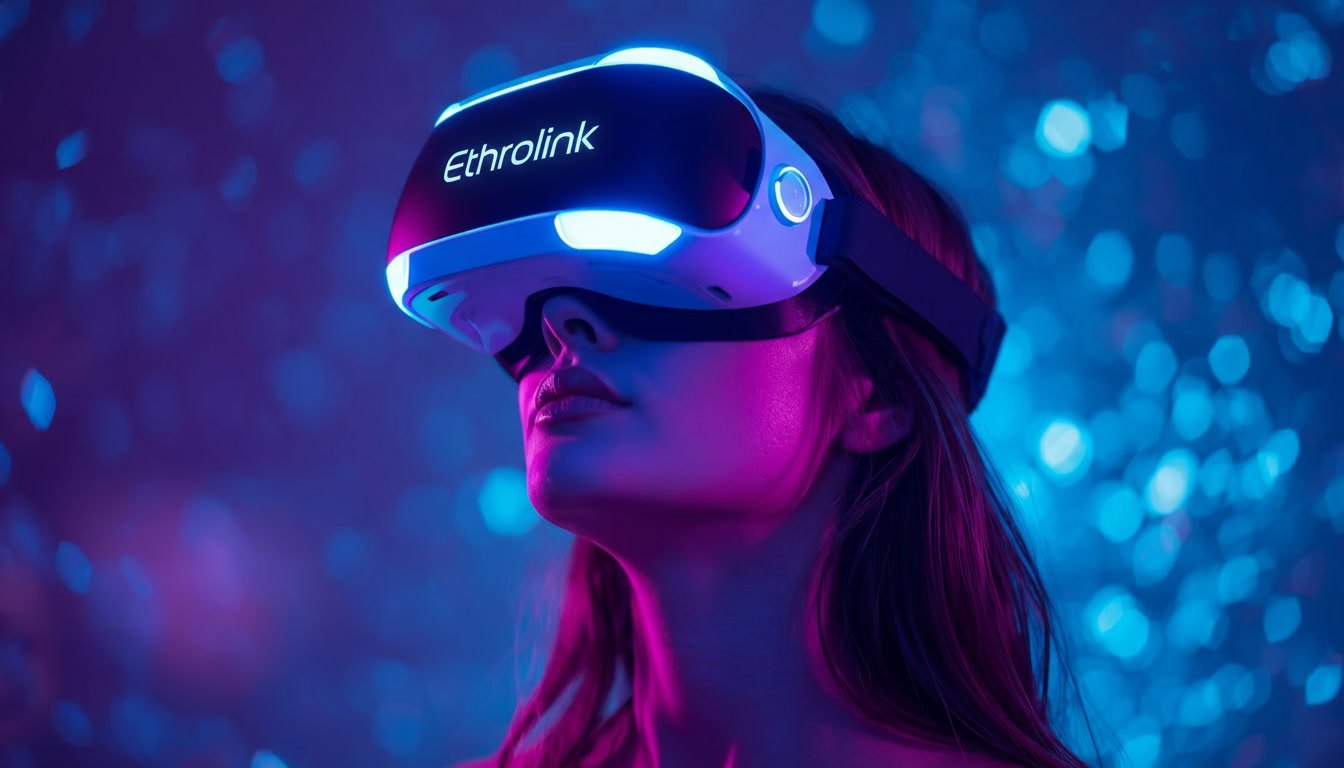
The evolution of Virtual Reality is not just about better graphics or more immersive environments—it's about revolutionizing how we interact with digital worlds. While current VR controllers have served us well, the future lies in interfaces that feel as natural as interacting with the physical world.

The Limitations of Current VR Interfaces
Today's VR controllers, while sophisticated, create a barrier between users and virtual experiences:
- Cognitive Load: Users must remember button mappings and controller functions
- Physical Limitations: Controllers don't accurately represent hand presence or fine motor skills
- Learning Curve: New users require time to become comfortable with controller-based interaction
- Immersion Break: The awareness of holding a device reminds users they're in a simulation
The Evolution of VR Interaction
Controller-Based (2016-Present)
Traditional gamepad-style controllers with buttons, triggers, and thumbsticks. Effective but artificial, requiring learned interactions rather than intuitive movements.
Basic Hand Tracking (2019-Present)
Early hand recognition allowing gesture-based inputs. Limited precision and reliability, but representing the first step toward controller-free interaction.
Eye & Gaze Tracking (2021-Present)
Integration of eye-tracking for foveated rendering and gaze-based selection. Significant performance improvements and more natural menu navigation.
Biometric Integration (2023-Present)
Heart rate, galvanic skin response, and facial expression tracking enabling emotional and physiological awareness in virtual experiences.
Haptic Feedback Systems (2024+)
Advanced haptic gloves and suits providing realistic touch sensations, temperature changes, and resistance feedback for truly immersive interactions.
Next-Generation Interaction Technologies
Neural Interfaces
Non-invasive brain-computer interfaces reading neural signals to enable thought-based control of virtual environments.
Muscle Sensing
EMG sensors detecting subtle muscle movements for precise hand and finger tracking without cameras.
Full Body Avatars
Complete body tracking creating realistic digital representations with natural movement and presence.

Applications of Natural VR Interaction
Professional Training and Simulation
Natural interfaces revolutionize professional training across industries:
- Surgical Training: Haptic feedback and precise hand tracking enable realistic surgical practice
- Technical Skills: Mechanics can practice complex repairs with realistic tool feedback
- Emergency Response: First responders train in high-stress scenarios with physiological monitoring
- Creative Professions: Artists and designers work with virtual tools that feel like their physical counterparts
Therapeutic and Rehabilitation Applications
Natural VR interaction enables breakthrough therapeutic approaches:
- Physical Therapy: Patients engage in guided exercises with real-time form correction
- Phobia Treatment: Gradual exposure therapy in controlled virtual environments
- Motor Skills Rehabilitation: Stroke recovery with precise movement tracking and feedback
- Mental Health: Mindfulness and meditation experiences with biofeedback integration

Technical Challenges and Solutions
Developing natural VR interfaces presents significant engineering challenges:
Latency and Responsiveness: Natural interaction requires near-instant response times. Advanced prediction algorithms and specialized hardware are reducing latency to imperceptible levels.
Precision and Accuracy: Current hand tracking struggles with fine motor tasks. Combining multiple sensing technologies (cameras, EMG, ultrasonic) creates more reliable input systems.
Power Consumption: Advanced sensing and haptic systems demand significant power. New low-power sensor designs and efficient processing algorithms are extending battery life.
Cost and Accessibility: Cutting-edge interaction technology remains expensive. As components mature and production scales, prices will become more accessible to mainstream consumers.
The Future of VR Interaction
Looking ahead, we can anticipate several transformative developments:
- Seamless Multi-Modal Interaction: Systems that combine voice, gesture, gaze, and thought for context-appropriate input
- Adaptive Interfaces: AI-powered systems that learn individual user preferences and adapt interaction patterns accordingly
- Social Presence: Realistic avatar interaction with natural eye contact, body language, and emotional expression
- Cross-Reality Interaction: Seamless movement between physical, augmented, and virtual realities with consistent interaction paradigms
- Embodied Cognition: Interfaces that leverage our innate physical intelligence for more intuitive digital interaction
As these technologies mature, the distinction between interacting with digital and physical worlds will continue to blur. The future of VR interaction isn't about better controllers—it's about creating interfaces that feel as natural as using our own hands, voices, and minds.
← Back to Blog